Do You Really Need Hearing Aids? The Honest Truth About Over-the-Counter and Club-Store Options
Here's a pattern I see constantly in practice.
A patient schedules a diagnostic hearing test, and it turns out they already have hearing aids, sometimes over-the-counter devices a son or granddaughter picked out for them, sometimes hearing aids from a big box store they've had for years. Either way, something led them to book an appointment anyway.
Usually it's because something feels off, or a family member noticed the hearing loss needed more attention than it got the first time around.
At the root of it, the same thing is usually missing. There was never a full conversation about what's actually happening with their hearing, no real treatment goals set, and no ongoing follow-up care. It was more of a quick fix than a full evaluation.
Sometimes the reason is cost. Sometimes it's simply not knowing where to go or who to see. And sometimes the device really does work fine, at least for a while.
This isn't really about where someone bought their hearing aids. It's about whether a full picture was ever built around their hearing loss, with real goals and a plan to keep checking in over time. That's the piece that's easy to skip, and it's usually the piece that matters most.
Over-the-counter hearing aids are a real, FDA-regulated category, built for adults with self-perceived mild to moderate hearing loss. Most people set them up through a self-assessment rather than a diagnostic hearing test. Some people do get a full diagnostic test first and choose an OTC device anyway, which is a reasonable choice too. Either way, the device itself is built around a general hearing profile, not necessarily fine-tuned and verified to one person's exact ear and results.
Club-store and big-box hearing aid programs typically do include a hearing screening, but the depth of testing, the technology tiers offered, and the amount of follow-up care built into the price vary widely by location and provider.
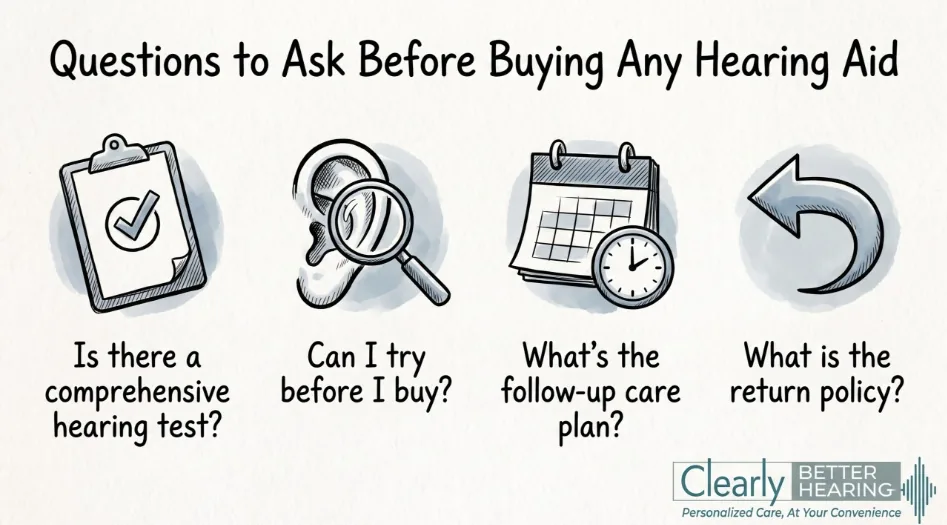
Here's what's worth asking before choosing any option: Does this include a full diagnostic hearing test, not just a screening? Is there a real-ear measurement to verify the device is actually delivering the right amplification in that specific ear canal? What does ongoing follow-up look like, and is it included or billed separately? What's the return policy if the fit isn't right?
None of this means OTC or club-store options are wrong for everyone. For some adults with mild, stable hearing loss, they work fine. For anyone with moderate to severe loss, sudden changes, ringing in the ears, or a desire to know exactly what's happening with their hearing before spending money, a full diagnostic evaluation is the better starting point.
Knowing your actual hearing loss first turns a guess into a decision.
If you or someone you're caring for is weighing options, I'm happy to answer questions, no pressure either way.
Questions about your own hearing, or someone you love? Call (713) 570-6370, or send me a request.
Request a Visit