
What to Expect When a Loved One Gets Hearing Aids: A Realistic Guide for Caregivers
A wife once sat in on her husband's two-week follow-up appointment. She was frustrated because they would be paying for hearing aids, and he still could not hear her.
As we talked it through, she admitted he was actually doing well with the hearing aids most of the time. The real problem showed up in one specific situation: she would be in the kitchen cooking dinner, and he would be in the living room watching TV, and they still could not communicate well across that distance.
That conversation turned into an eye-opening one for both of them. Once we talked through what hearing aids can and cannot realistically do, she left with a clearer sense of her own role in this process too, not just handing him a pair of hearing aids and expecting every future conversation to fix itself.
That is a pattern worth setting expectations around early, for any caregiver supporting someone newly fit with hearing aids.
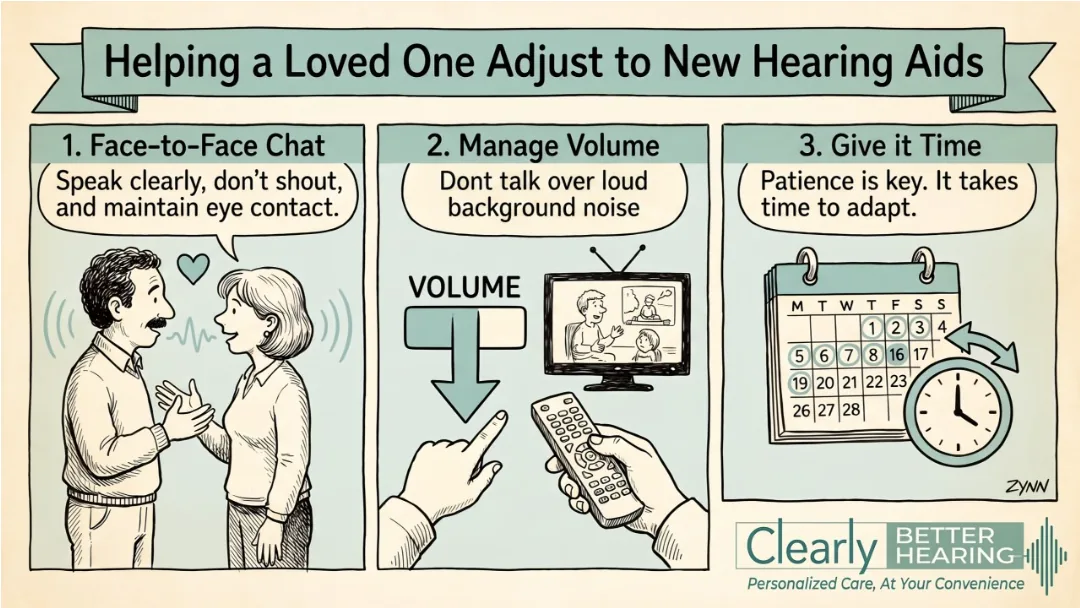
The brain needs time to relearn sounds it has not processed clearly in years. Most people need at least 4 weeks before things start to feel more natural, sometimes longer. Voices, footsteps, and background noise can feel unusually loud or distracting at first. That is normal, not a sign the devices are not working.
Hearing aids amplify and clarify sound. They do not restore hearing to exactly what it was, and they do not work like an intercom. Talking to someone from another room, or from behind them while they are not facing you, is still going to be hard to follow, hearing aids or not.
A few habits make a real difference during this adjustment period, and afterward too. Get their attention before you start talking. Face them, ideally within a normal conversational distance. Speak at a normal pace and volume, since over-enunciating or shouting actually distorts speech more than it helps. Cut down on competing noise when you can, turn down the TV, or move to a quieter room before an important conversation.
One topic at a time helps as well. Jumping between subjects quickly, or several people talking at once, is still hard to follow even with good hearing aids, especially in the first few weeks.
If frustration shows up early on, from either of you, that is common, and it usually is not a sign something is wrong. Settings often need fine-tuning as the brain adjusts, and follow-up visits are built into the process specifically for this reason.
Your role matters here. A caregiver or loved one who understands what hearing aids can and cannot do, and who adjusts a few small habits, makes the adjustment period shorter and the outcome better for everyone involved.
If you are supporting someone through this process and have questions, I am happy to be a resource.
Questions about your own hearing, or someone you love? Call (713) 570-6370, or send me a request.
Request a VisitMore for families on supporting someone through hearing care, and on listening training.