
What Makes a Good Audiology Referral: A Quick Guide for Physicians and Office Staff
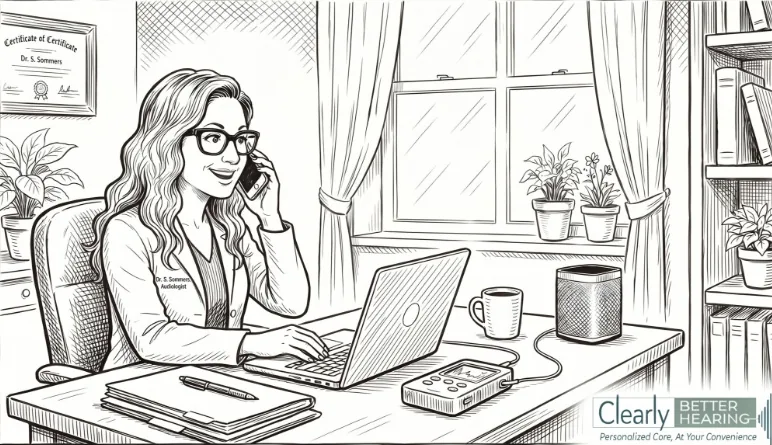
I still think about a phone call from a patient who was frustrated by a new case of ringing in her right ear. She had a trip planned soon and just wanted it to go away before she left.
After asking a few more questions, something about the presentation did not sit right with me: new, one-sided, with no clear cause. I told her she needed to see an ENT as soon as possible, not wait until after her trip.
That visit led to imaging, and the imaging found an aneurysm.
I share that not to suggest every case of new tinnitus is something serious, most are not, but because it is a clear example of why the line between seeing an audiologist and seeing a physician first actually matters. Recognizing which situation you are in, and having a referral network that moves quickly in either direction, can matter more than people realize.
Hearing concerns come up constantly in primary care, geriatrics, ENT, and neurology visits, often as a side note rather than the main reason for the appointment. Here's a quick guide for deciding when a referral is worth making, and what to expect once it happens.
A few situations that typically warrant a referral: a patient or family member mentions increased TV volume, repeated questions, or difficulty on the phone. A patient is being evaluated for cognitive concerns, since untreated hearing loss is a documented factor in cognitive assessment accuracy and in dementia risk research. A patient has had a fall or near-fall, since hearing and balance share overlapping structures in the inner ear. Or a patient simply hasn't had a baseline hearing test in several years, which is reasonable to suggest the same way you'd suggest routine screenings for other systems.
A few situations that call for medical evaluation first, rather than a standard referral: sudden hearing loss in one or both ears, new or one-sided ringing in the ears, hearing loss with dizziness or vertigo, drainage or pain, or asymmetric hearing loss without a clear cause. These warrant your own workup or an ENT referral before an audiology evaluation proceeds.
Timing matters in cases like these. Getting into a clinical environment can sometimes take weeks, not days. One advantage of being a mobile provider is that I can often see someone the same day when something like sudden hearing loss comes up, so that information gets back to you quickly instead of sitting on a waiting list.
Once a referral is made, my process is straightforward. I contact the patient directly to schedule, typically within a few days, though I can often see someone the same day for urgent situations like sudden hearing loss. For mobility-limited or homebound patients, the visit happens at home rather than requiring a trip to a clinic. Results and any recommendations get communicated back to your office, so the loop closes on your end too.
If you'd like a simple one-page referral guide for your office, or want to set up a standing referral relationship, I'm glad to make that easy.
Working with older adults, residents, or homebound patients? I would be glad to be a resource.
How Referrals Work