
What Actually Happens During an In-Home Hearing Test?
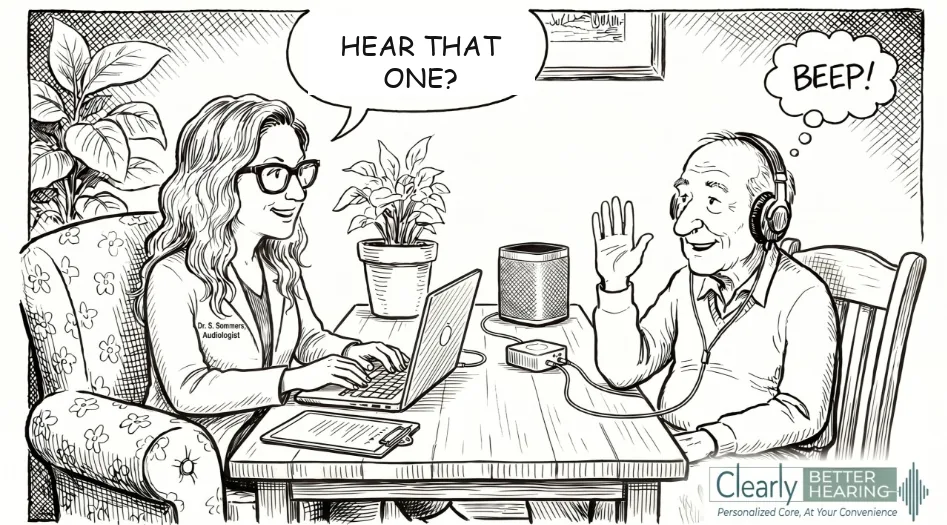
One of my patients from a previous practice is a widow who lives alone. She wanted to keep working with me as her audiologist, but she wasn't sure what an in-home visit would actually look like.
She scheduled a visit to check her hearing aids and run a quick hearing test. When I arrived and set up the same professional equipment right on her kitchen table, she was amazed. She hadn't realized that kind of convenience existed for hearing care, the same way it already does for physical therapy or occupational therapy visits at home.
As someone living alone, getting to and from a clinic for hearing care was often more than she wanted to take on some days. Having the visit come to her instead made a real difference.
Her reaction is a good example of what an in-home hearing test actually looks like, so here's the full picture for anyone you refer.
I start with a conversation, not a form. What's changed. What's frustrating. What matters most to fix. This usually takes 10 to 15 minutes and gives me real context before any testing starts.
Next comes the hearing test itself. I bring the same equipment used in a clinic setting, right to a kitchen table or living room. It measures how someone hears different pitches and how clearly they understand speech, especially with background noise. This takes about 30 to 40 minutes and causes no discomfort.
Then we go over the results together, in plain language. No jargon, no rushed explanation. If hearing aids make sense, we talk through options based on the person's actual goals, not a generic recommendation. If something needs a physician's attention first, like fluid or a sudden change, I say so and refer out.
The whole visit runs 60 to 90 minutes, start to finish.
For your patients, residents, or clients, this removes the two biggest barriers to getting tested at all: transportation and unfamiliar environments. For homebound patients especially, this isn't a convenience. It's often the only realistic way testing happens.
If you're coordinating care for someone who could benefit from a hearing evaluation, feel free to reach out. I'm happy to answer questions before the first visit even happens, so you can set accurate expectations with the people you're helping.
Questions about your own hearing, or someone you love? Call (713) 570-6370, or send me a request.
Request a VisitMore on what a mobile hearing visit includes and what to expect.