
Why Homebound Patients Are the Ones Most Likely to Be Missed for Hearing Care
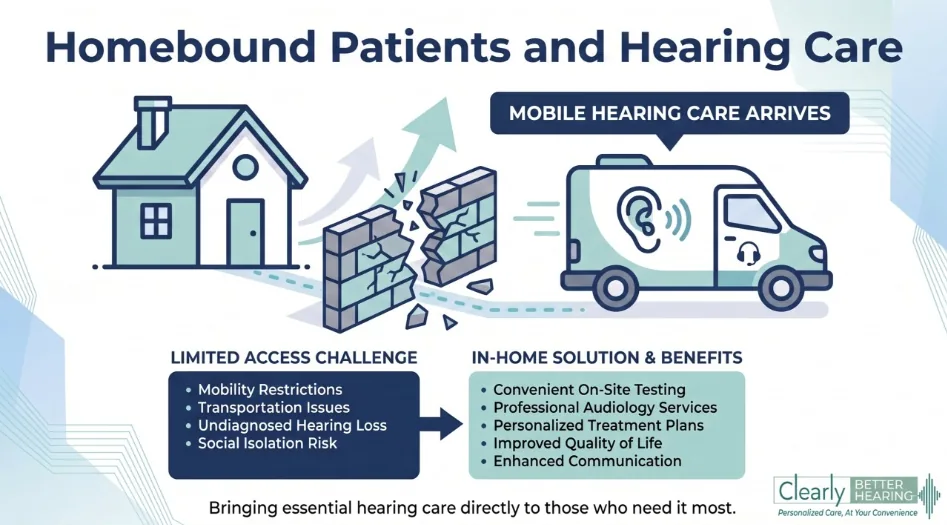
When someone has mobility issues or is truly homebound, there are usually significant health concerns already competing for attention. Appointments with cardiologists, podiatrists, endocrinologists, and neurologists understandably take priority. Hearing is often one of the last needs addressed, simply because there are so many other things already demanding time and energy.
One patient stays with me clearly. I walked into her apartment and found her sitting in her wheelchair. Being able to sit with her at her own kitchen table and perform the full evaluation right there, without her needing to get in and out of the wheelchair or arrange transportation to a clinic, made all the difference.
That is the reality for a lot of homebound patients. By definition, they face barriers to almost every kind of specialist care, and hearing is often the one that falls furthest down the list, even though it affects daily communication, safety, and connection more than most people realize.
The usual path to a hearing test assumes someone can get to a clinic. For homebound patients, that assumption breaks down immediately, and hearing loss simply goes unaddressed, sometimes for years past when it was first noticed.
This has real consequences beyond communication. Untreated hearing loss is tied to higher fall risk and to added cognitive strain, both of which matter significantly for a homebound population already managing other health risks.
An in-home hearing evaluation removes the transportation barrier entirely. Testing happens in the patient's own home, using the same equipment and standards as a clinic visit, coordinated around the schedule you and your team already manage.
For home health agencies and geriatric care managers, this can fit naturally into an existing care plan. A hearing evaluation doesn't require a separate trip, a special appointment slot, or transportation coordination on your end, since the visit comes to the patient directly.
If you manage care for homebound patients and hearing has been a gap in your referral network, I'd like to be a resource you can call on. I'm happy to talk through how a referral or ongoing partnership could work for your caseload.
Working with older adults, residents, or homebound patients? I would be glad to be a resource.
How Referrals Work